



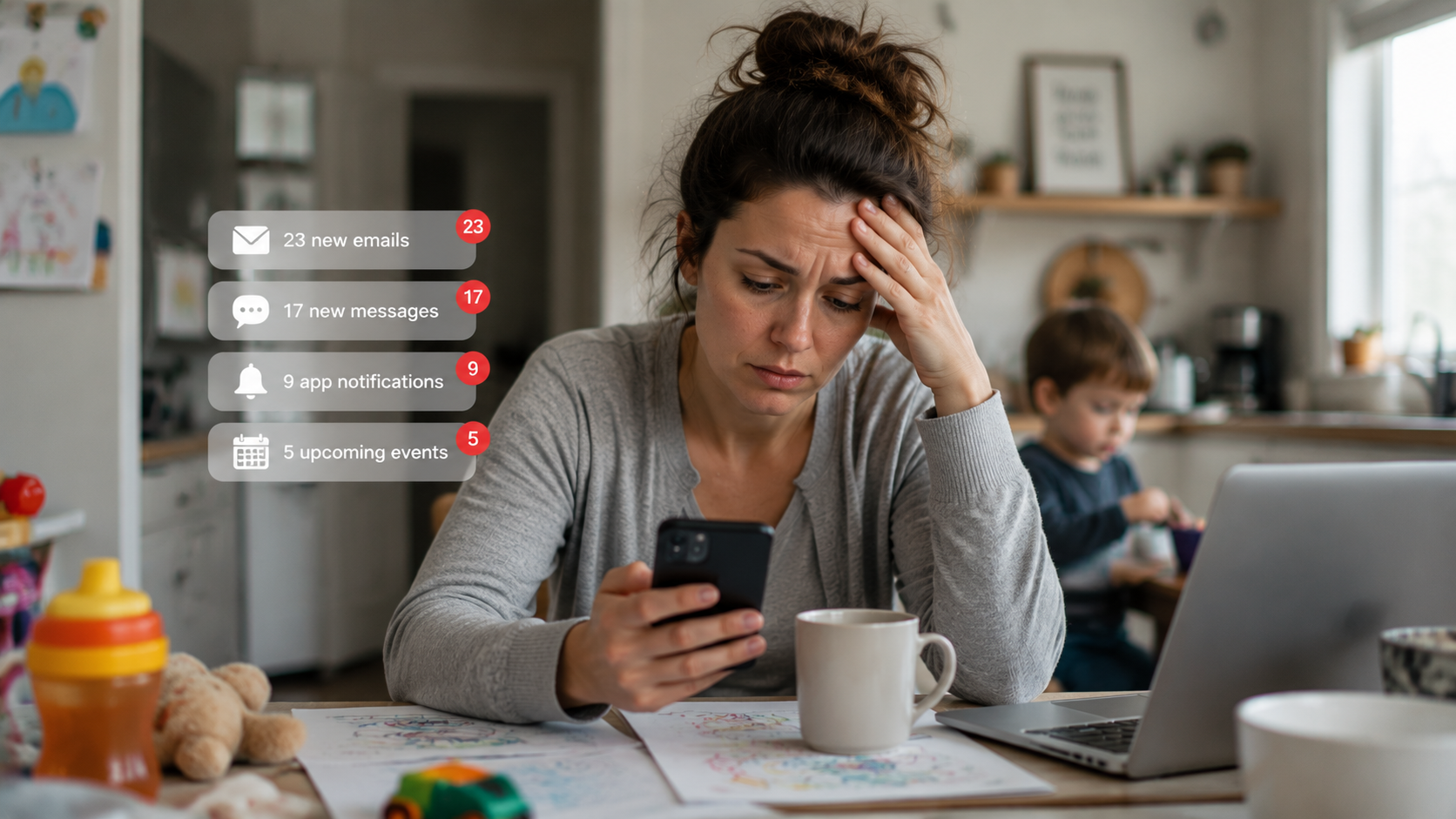
Modern motherhood is more connected than ever, but that constant connection comes with a cost. Between notifications, group chats, school emails, social media pressure, and endless scrolling, many moms are experiencing what experts now call digital overstimulation.
If your brain feels noisy even when your house is quiet, you are not alone. A simple mom digital overload reset can help you slow down, regain clarity, and feel like yourself again.
What Is Digital Overload for Moms?
Digital overload happens when your brain is exposed to too much information, too often, without enough breaks to recover. For moms, this often looks like juggling messages, reminders, school apps, emails, and social media while still managing home life.
It is not just about screen time. It is about the mental load of always being “available.” Your brain never fully powers down.
This connects strongly with other stress-related topics on Mommy Snapped, especially your post on mom mental load reduction strategies.
Signs You Need a Digital Reset
You may need a reset if you experience:
- Feeling anxious after scrolling your phone
- Constant mental fatigue even after resting
- Difficulty focusing on one task
- Irritability from small interruptions
- Checking your phone without thinking
- Feeling overwhelmed by messages or emails

Why Digital Overload Hits Moms Harder
Moms are often the “default responders” in the home. School apps send updates, family members send messages, and household tasks are tracked digitally. This creates a constant expectation to respond quickly.
Over time, your nervous system stays in a mild stress state. Even small pings or vibrations can trigger mental fatigue.
According to the American Psychological Association, constant digital stimulation can increase stress and reduce emotional regulation over time.
Step 1: Do a 10-Minute Digital Pause
The fastest reset is also the simplest. Put your phone on silent and step away for 10 minutes.
Do not scroll. Do not check messages. Just pause.
You can sit outside, drink water, stretch, or simply breathe. The goal is to let your brain experience silence again.
Step 2: Clean Up Your Notification Chaos
Most stress does not come from apps themselves—it comes from notifications.
Turn off non-essential alerts like social media, promotions, or unnecessary app reminders. Keep only what is truly important, like school messages or emergency contacts.
Less noise equals more peace.
Step 3: Create “No Phone Zones” in Your Day
Pick one or two parts of your day where your phone is off-limits.
Examples include:
- Morning coffee time
- Mealtime with kids
- First 30 minutes after waking up
- One hour before bed
This helps your brain reset naturally instead of staying in constant input mode.

Step 4: Replace Scrolling With One Real Activity
Instead of reaching for your phone during downtime, choose one grounding activity:
- Reading a few pages of a book
- Light stretching or yoga
- Journaling your thoughts
- Making tea or coffee mindfully
These small habits help your brain shift from stimulation to recovery.
Step 5: Simplify Your Digital Life
You do not need 15 apps managing your life. Try consolidating tasks into fewer tools.
Use one calendar, one notes app, and one messaging system for family communication if possible.
Simplifying reduces decision fatigue and mental clutter.
Step 6: Teach Your Brain to Rest Again
One of the hidden effects of digital overload is the loss of boredom. But boredom is where creativity and calm return.
Sit without input for a few minutes daily. Let your mind wander. It may feel uncomfortable at first, but it is powerful for mental recovery.
For deeper emotional balance, explore related guidance on mom burnout recovery.
Step 7: Protect Your Energy With Boundaries
Not every message needs an instant reply. Not every notification needs attention.
Start setting small boundaries like:
- Replying to messages at set times
- Turning off read receipts
- Silencing group chats temporarily
Boundaries are not distance—they are protection for your mental health.
Helpful Tools for Digital Balance
- Headspace – Guided mindfulness for stress relief
- Calm App – Sleep and relaxation support
- RescueTime – Tracks screen habits
- National Institute of Mental Health – Mental wellness resources
- Healthline – Stress and anxiety education
Final Thoughts
A mom digital overload reset is not about quitting technology. It is about using it without letting it control your peace of mind.
Even small changes—like fewer notifications, intentional breaks, and mindful pauses—can make your days feel lighter and calmer.
You do not need a perfect routine. You just need space to breathe again.
And that starts with one small pause today.