



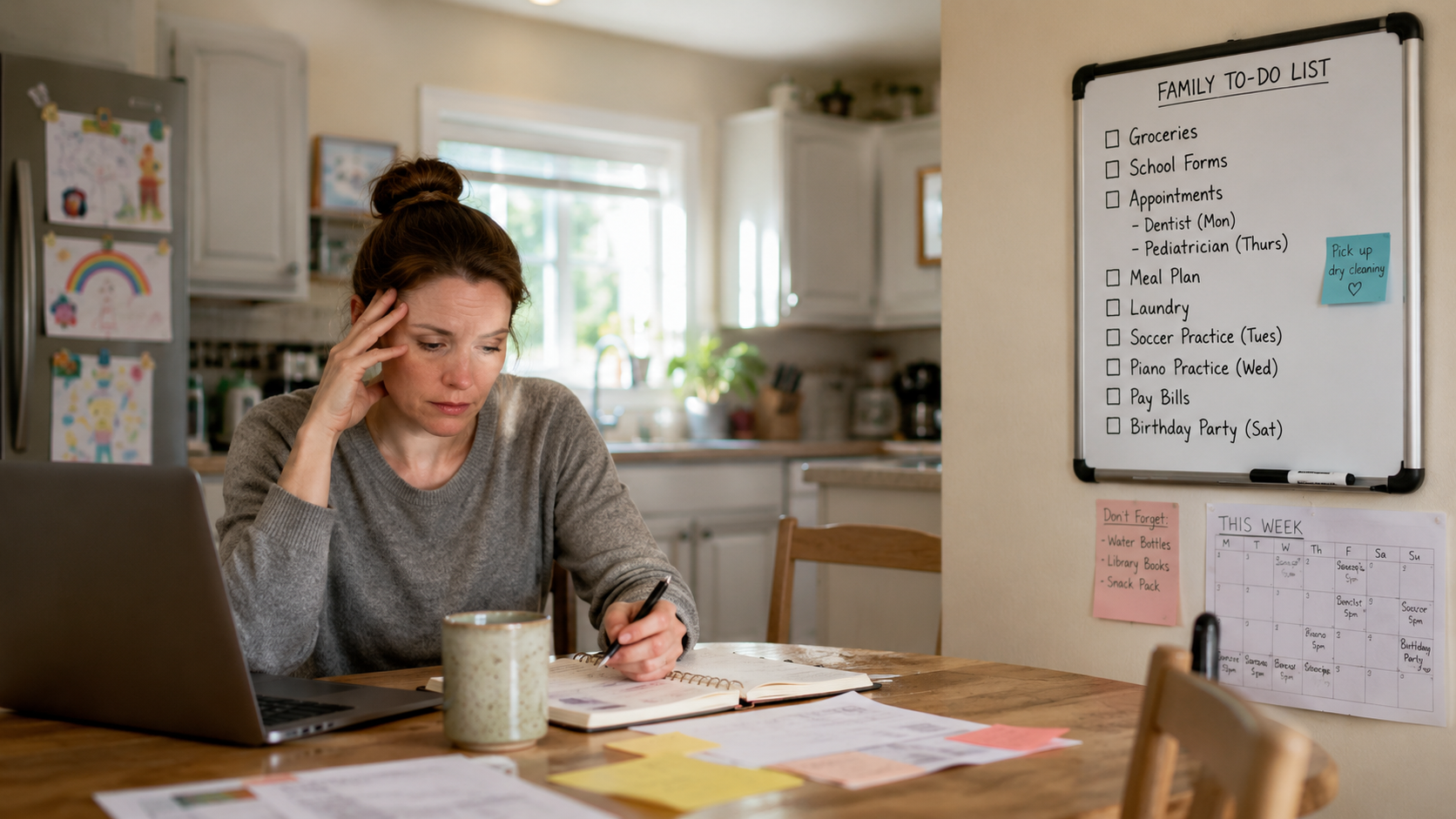
If you feel like you are the family’s CEO, scheduler, grocery list keeper, appointment manager, emotional support person, and backup plan all at once, you are not alone. The mom mental load is real, and it can feel exhausting even on days when nothing looks “wrong” from the outside.
The good news is that you do not have to carry all of it forever. With small changes, clearer systems, and more shared responsibility, you can reduce the invisible weight and create more peace in your home.
What Is the Mom Mental Load?
The mom mental load is the constant background work of running a household and caring for a family. It is not just doing tasks. It is remembering what needs to happen, noticing what is running low, planning ahead, and keeping everything moving.
It can include remembering school forms, scheduling doctor visits, planning meals, tracking birthdays, buying gifts, preparing snacks, managing bedtime routines, and noticing when someone needs emotional support.
This kind of work often happens quietly. Nobody may see you remembering that the lunch snacks are almost gone, the soccer uniform needs washing, or the dentist appointment needs rescheduling. But your brain is still carrying it.

Why the Mental Load Feels So Heavy
Most moms were not formally asked if they wanted to become the household manager. It just happened over time. You noticed what needed to be done, so you did it. Then people started depending on you to remember everything.
The pressure to do it all perfectly can make the load even heavier. Add work, kids, chores, relationships, bills, family expectations, and almost no quiet time, and it becomes easy to feel drained.
For more practical support, you may also enjoy reading 10 Sanity-Saving Mom Hacks That Actually Work.
Signs Your Mental Load Is Too High
Every mom has busy days, but constant overwhelm can be a sign that your mental load is too heavy. You might notice:
- Feeling anxious or on edge most of the day
- Brain fog or forgetfulness
- Getting irritated over small things
- Trouble sleeping because your mind keeps racing
- Feeling like nobody sees how much you do
- Feeling resentful or taken for granted
- Struggling to relax even when you finally have free time
How To Lighten the Mom Mental Load
You do not have to carry everything alone. These realistic steps can help reduce the pressure and make your home life feel more manageable.
1. Write Everything Down
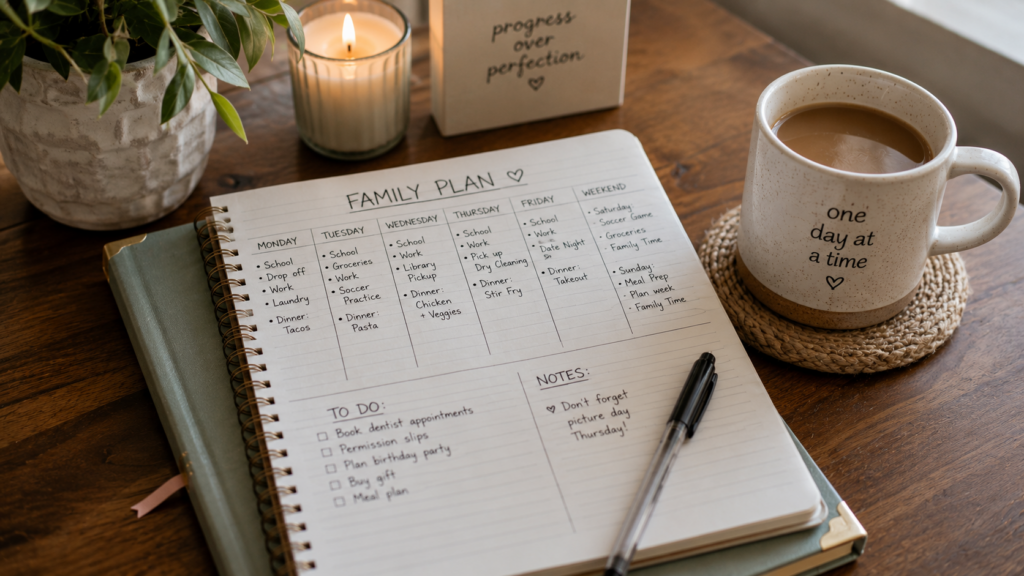
Trying to store everything in your head makes the mental load heavier. Use a notebook, planner, whiteboard, notes app, or shared calendar to dump everything out of your brain.
Write down school deadlines, meal ideas, bills, errands, appointments, household tasks, and reminders. Seeing everything in one place helps you stop mentally repeating the same tasks all day.
2. Share the Load Clearly
Many moms say they do not just need help. They need someone else to fully own a task. There is a difference between “helping with school stuff” and being responsible for checking school emails, signing forms, packing supplies, and tracking deadlines.
Try using clear language like, “You handle school emails this month,” instead of “Can you help with school things?” Shared responsibility works better when the task has a clear owner.
3. Simplify Where You Can
Not everything needs to be done the hard way. Repeat easy meals. Use grocery pickup. Keep a shared family calendar. Create a simple laundry system. Set up baskets for school items, sports gear, and daily essentials.
Simple systems reduce decision fatigue. The goal is not to create a perfect home. The goal is to make daily life easier.
For more routine inspiration, check out Screen Time Management for Busy Moms — Healthy Balance Without the Guilt.
4. Stop Doing Tasks No One Actually Needs
Some tasks stay on your list only because they have always been there. Ask yourself, “Does this really need to be done?” and “Does this need to be done by me?”
Maybe towels do not need folding perfectly. Maybe dinner can be simple. Maybe the playroom can stay messy until the evening. Maybe not every school event needs a handmade contribution.
Letting go of unnecessary tasks creates more space for the things that truly matter.
5. Take Care of Yourself Without Guilt
You cannot pour from an empty cup. Even a few minutes of self-care can help your mind and body reset. A walk, hot drink, quiet shower, journal session, short nap, or screen-free break can make a difference.
If self-care feels difficult to fit in, read Self-Care Ideas for Busy Moms Who Do It All for realistic ideas that do not require hours of free time.

Helpful Tools and Resources for Reducing the Mental Load
The right tools can make it easier to stay organized and reduce daily overwhelm. Here are helpful options:
- Cozi Family Organizer for shared calendars, grocery lists, and family schedules.
- Trello for tracking family tasks, chores, and to-do lists.
- Todoist for simple task management and reminders.
- The National Institute of Mental Health for helpful mental health information.
- Mindful for mindfulness tips that can help calm a busy mind.
Small Changes That Make a Big Difference
You do not need a complete life overhaul to feel lighter. Small shifts can slowly reduce the mental load and help your days feel calmer.
- Do a 10-minute reset at the end of the day.
- Keep a folder for important papers and school forms.
- Prep tomorrow’s basics the night before.
- Use a shared calendar everyone can access.
- Assign recurring chores to each family member.
- Keep meals simple during busy weeks.
- Ask, “Does this really need to be done?”
- Let go of guilt when everything is not perfect.
How Partners and Family Members Can Help
One of the best ways to reduce the mental load is to make it visible. Many partners and family members do not fully understand how much is happening in your head until they see it written down.
Try having a weekly family planning check-in. Talk about meals, school needs, appointments, chores, bills, and emotional needs. Assign tasks clearly, then allow others to manage them without constant reminders.
Children can also help in age-appropriate ways. They can pack their bags, put clothes in the hamper, clear plates, refill water bottles, or help tidy toys. These small responsibilities teach independence while reducing your daily pressure.
Why Rest Is Part of Productivity
Many moms feel guilty resting when there is still work to do. But rest is not the opposite of productivity. Rest helps you think clearly, respond with more patience, and avoid running on empty.
Even short breaks matter. A quiet cup of coffee, a short walk outside, or ten minutes away from noise can help your nervous system calm down.
If you are feeling close to burnout, you may also find comfort in Mom Burnout Recovery: Self-Care Tips That Actually Work.
Final Thoughts
The mom mental load is real, but you do not have to carry it alone. Talk to your partner, involve your kids in age-appropriate tasks, use tools that simplify your day, and lean on your support system when possible.
Progress matters more than perfection. A lighter load can help create a calmer home, a healthier mindset, and more room for joy in everyday motherhood.
You matter, too. Your well-being matters. And your mind deserves rest.