



Slow Motherhood in 2026: Simple Ways to Feel Less Rushed
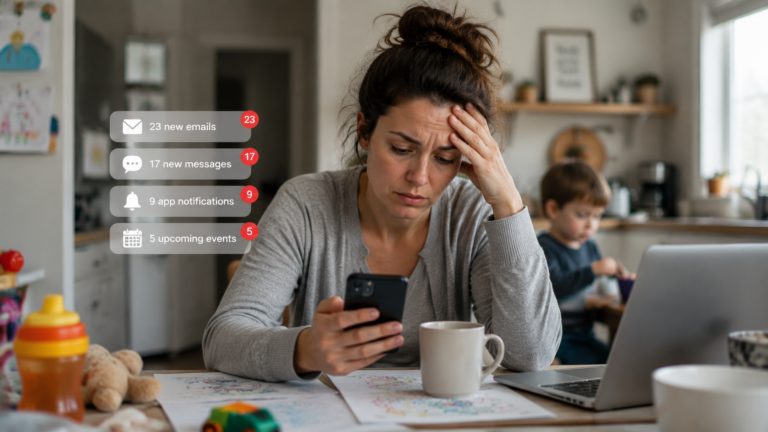
Some days, motherhood feels like a race nobody remembers signing up for. Breakfast becomes a countdown, school pickup turns into a sprint, and the afternoon somehow disappears between laundry, homework, and asking everyone to please find their shoes.
That is why slow motherhood is resonating with families in 2026. It is not about giving up activities, avoiding technology, or living in a picture-perfect farmhouse. It is about choosing a little more breathing room, letting children enjoy ordinary moments, and remembering that a full calendar is not the same thing as a fulfilling childhood.
The 2026 Pinterest Parenting Trend Report highlights growing interest in offline experiences and family traditions. Pinterest reported year-over-year search increases of 200% for both “screen free activities” and “family traditions ideas.” The trend is about real connection, not another impossible parenting standard.
What Does Slow Motherhood Actually Mean?
Slow motherhood is an approach to family life that makes room for play, connection, rest, and flexibility. Instead of treating every free hour as a slot to fill, you leave some time unplanned. Instead of always rushing to the next milestone, you notice what your child is enjoying right now.
This does not mean ignoring work deadlines or skipping necessary routines. A parent working long shifts can still practice slow motherhood through a ten-minute bedtime conversation, an unhurried walk to the bus stop, or a simple Saturday breakfast together.
In the 2026 National Parent Survey, 72% of surveyed parents with young children said they wanted more quality time with their children. Slow motherhood offers one way to think about that desire without assuming every family has the same resources or free time.
1. Leave One Part of the Day Unscheduled
If every afternoon includes an activity, an errand, and a checklist, start by protecting one small window with no agenda. It might be twenty minutes after school or half an hour on a weekend morning.
Let your child decide between drawing, building with blocks, pretending to run a store, or simply resting. You do not need to plan the entire experience. Being available and providing a safe space may be enough.
For families whose schedules feel overwhelming, these sanity-saving mom hacks can help simplify the practical tasks that compete with family time.

2. Make Room for Play Without an Outcome
Not every activity needs to teach letters, produce a craft worth displaying, or help your child get ahead. Sometimes children need to invent a game, change the rules halfway through, or build a cardboard castle that looks nothing like a castle.
The American Academy of Pediatrics explains the developmental value of play, including opportunities to strengthen social skills, planning, language, and emotional regulation.
Set out crayons, recycled boxes, washable paint, or building toys and let imagination lead. If you want easy inspiration without a complicated supply list, try these kid-friendly DIY projects.
3. Choose Connection Over Constant Correction
It is easy to spend an entire afternoon giving instructions: hurry up, clean that, sit down, finish this, do not touch that. Some guidance is necessary, but children also need moments when an adult is simply interested in what they are doing.
Try pausing to ask, “Tell me about what you built,” or “What was your favorite part of today?” Listen without immediately changing the subject into a lesson.
Harvard University’s Center on the Developing Child describes serve-and-return interactions as responsive back-and-forth exchanges that support young children’s early development. These exchanges can happen during play, meals, or everyday conversation.
4. Bring Back Simple Family Traditions
Children do not necessarily remember how elaborate a family outing was. They may remember Friday pancakes, reading under a blanket, watering the plants together, or choosing a song while dinner cooks.
Pick one tradition that fits your actual life and budget. Perhaps Sunday means visiting a nearby park. Maybe Wednesday means homemade pizza. Maybe everyone shares the funniest part of their day over dinner.
Keep it uncomplicated. A tradition should feel like something your family enjoys returning to, not another obligation that requires shopping, decorating, and social media photos.
5. Turn Everyday Chores Into Shared Moments
Slow motherhood is not about pretending the laundry and dishes disappear. It is about finding small opportunities to connect while normal life continues.
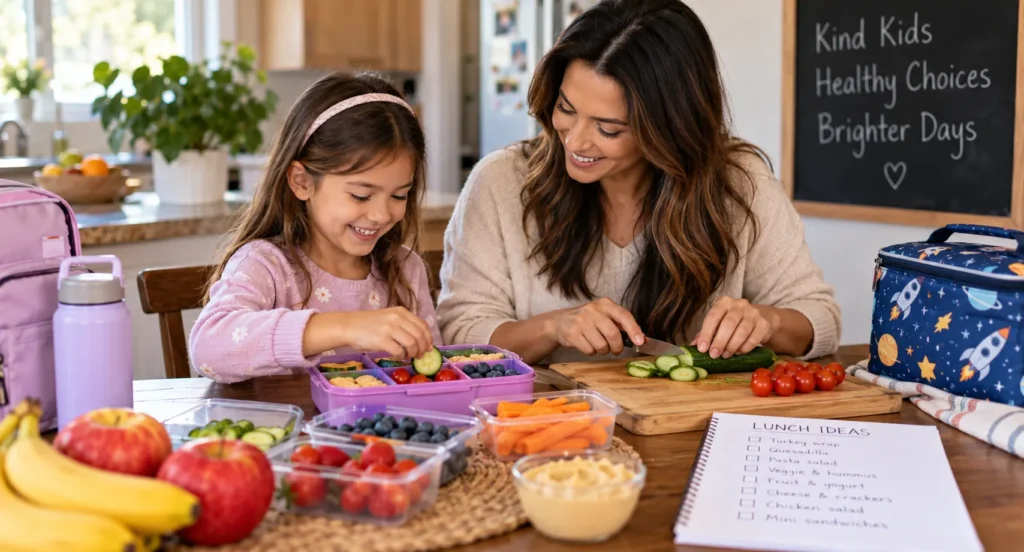
Invite your child to rinse vegetables, match clean socks, water a plant, or help pack tomorrow’s lunch. Younger children may move slowly or make a mess. Choose tasks that are safe and age-appropriate, and allow extra time when possible.
It is perfectly fine to finish a chore more efficiently on busy days. The point is not to turn every responsibility into an educational project; it is to notice when doing something together feels better than rushing through it alone.
6. Spend More Time Outdoors, Even Briefly
Outdoor time does not require a hiking vacation or a huge backyard. A short walk, a visit to a playground, looking for interesting leaves, or watching clouds from a safe outdoor space can become a welcome pause.
The CDC’s physical activity guidance recommends that children ages 3 to 5 be active throughout the day and that those ages 6 to 17 get at least 60 minutes of moderate-to-vigorous physical activity daily. Play, walking, and active games can contribute to these goals.
UNICEF’s International Day of Play resources also emphasize the importance of children’s opportunities for free, unstructured play. Choose accessible, safe spaces and adapt activities to your child’s abilities.
7. Make Screen Boundaries Feel Realistic
Slow motherhood is not a promise to eliminate every screen. Video calls, movies, homework tools, and shared games can all have places in family life. What matters is whether technology is crowding out the experiences your family values.
Try designating one regular screen-free moment, such as dinner or the first fifteen minutes after school. Keep a basket of books, coloring materials, or favorite toys within reach so there is an easy alternative.
For a more flexible approach that avoids unnecessary guilt, read Mommy Snapped’s guide to screen time management for busy moms.
8. Protect Your Own Breathing Room
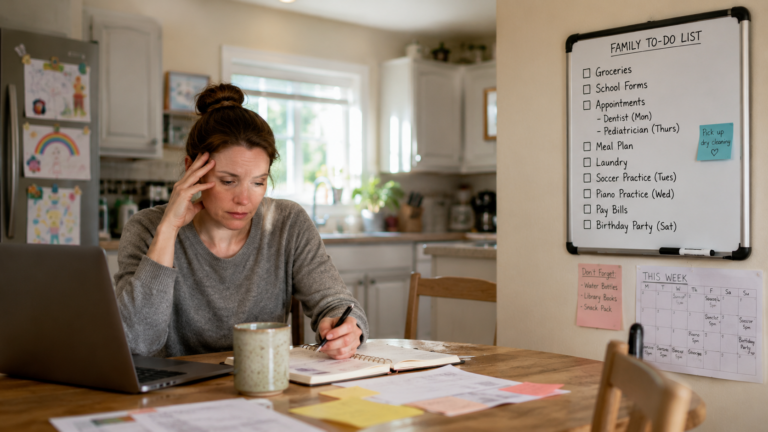
A slower family rhythm cannot depend on Mom doing even more invisible work. If simplifying childhood means you become the unpaid coordinator of twelve wholesome activities, something has gone wrong.
Ask other adults to share planning and household responsibilities. Say no to an optional commitment when your schedule is already full. Let a quiet afternoon remain quiet instead of filling it with errands just because there is an opening.
Our article on lightening the mom mental load offers additional ways to distribute responsibility and reduce the constant pressure to remember everything.
A Simple Slow Motherhood Weekend to Try
You do not need to redesign your entire lifestyle. Try a gentle experiment this weekend:
- Morning: Share a relaxed breakfast without rushing to fill the day.
- Late morning: Let the children choose a safe outdoor activity or open-ended play.
- Afternoon: Leave a little time free for reading, resting, or spontaneous ideas.
- Evening: Make a simple meal together or enjoy a familiar family tradition.
Notice which moments felt good and which plans were unrealistic. Then keep only what works. Families with unusual work schedules, children with additional support needs, or limited access to safe outdoor spaces can adapt this idea without trying to imitate anyone else’s routine.
Slow Motherhood Is Not Another Test to Pass
Some weeks will be chaotic. Your child will want an activity that requires a long drive. You will have deadlines, appointments, and a sink full of dishes. A slower approach does not ask you to feel peaceful all the time.
When the day falls apart, reconnect instead of judging yourself. Mommy Snapped’s story about finding joy in everyday parenting chaos offers a useful reminder that imperfect moments are part of family life.
Final Thoughts
Slow motherhood in 2026 is not about doing less for your children. It is about making room for what matters within the life you already have: unhurried conversations, playful afternoons, simple traditions, and moments when nobody has to rush to the next thing.
Start with one ordinary moment this week. Leave ten minutes unscheduled. Read the extra page. Take the slower walk. Let the cardboard castle stay unfinished until tomorrow.
Your family does not need a perfectly curated childhood. It needs opportunities to be together, and those opportunities can begin with the smallest pause.